
Key Takeaways
- A musty or damp smell can signal hidden mold even before anything is visible on walls or ceilings
- Dark spots, stains, or discoloration on grout, drywall, or around windows deserve attention, though color alone cannot confirm whether the mold is Stachybotrys
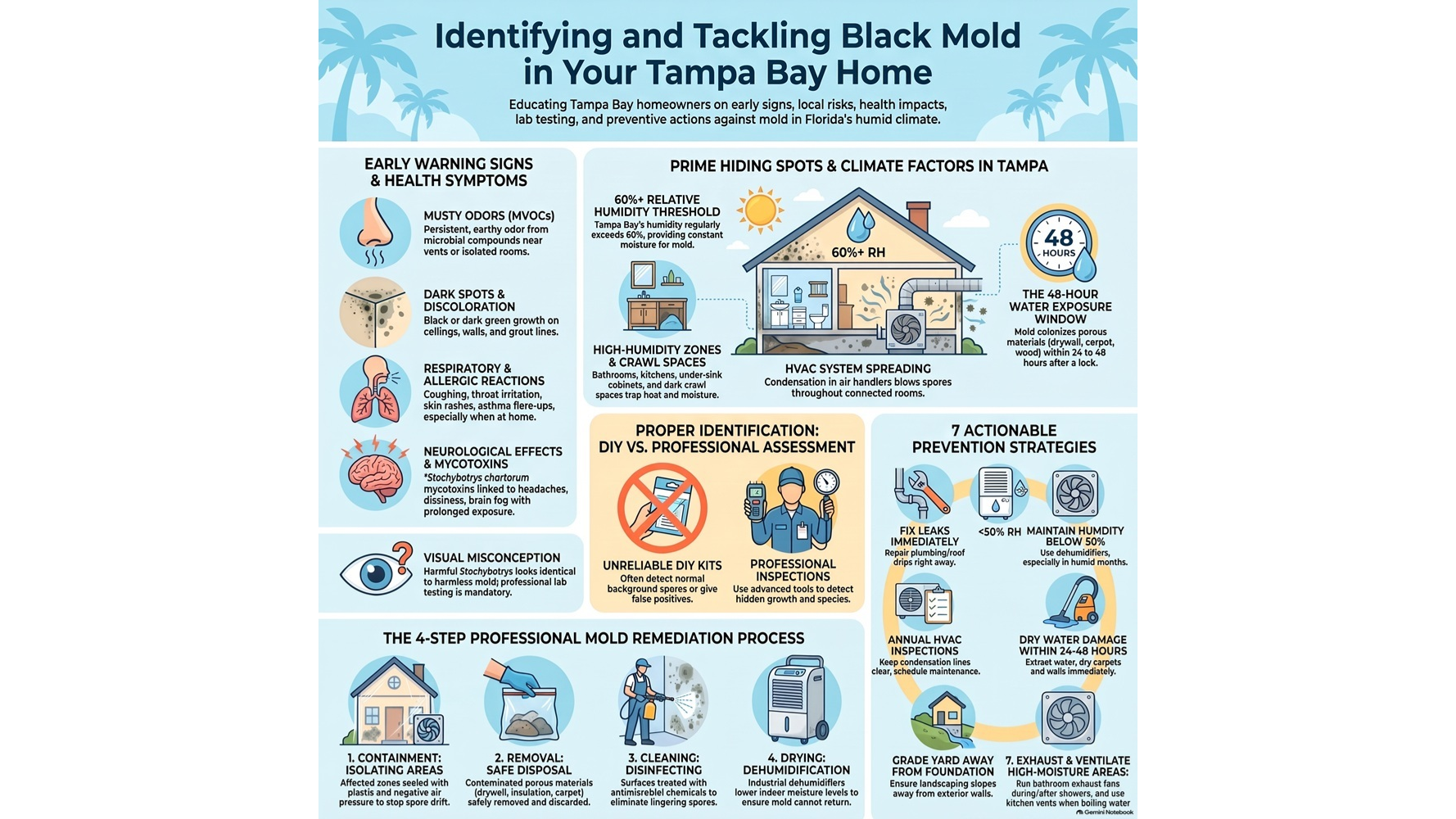
- Mold can begin colonizing wet materials within 48 hours, which makes fast drying after a leak or flood critical
- Bathrooms, kitchens, crawl spaces, and hidden areas behind drywall or inside ductwork are common places where mold growth in Tampa Bay homes gets overlooked
- A professional mold inspection uses tools like moisture meters and air sampling to find what store-bought test kits often miss
A musty smell that lingers after cleaning, a dark smudge creeping across bathroom grout, or a water stain left behind from last week’s storm can all raise the same question for a homeowner: is this mold? Tampa Bay’s warm, humid climate makes that question come up often, and the earliest clues are rarely dramatic. They tend to be small, easy to dismiss, and easy to miss until the problem has already spread somewhere out of sight.
Musty Smell or Dark Spots? Act Now
Noticing a problem early almost always beats finding one late. A damp odor or an unexplained stain is the house sending a signal, and that signal deserves a closer look rather than a quick wipe-down and a hope that it goes away on its own.
Acting on these early warnings matters because mold rarely stays contained to the spot where it first appears. A patch behind a baseboard or inside a wall cavity can keep growing quietly for weeks while the visible signs stay minor. Investigating promptly, and bringing in mold inspection support when the source of moisture is not obvious, gives a much clearer picture of what is actually happening inside a home than guesswork ever can.
Early Clues Something Is Growing
Mold growth typically announces itself through smell or sight long before anyone goes looking for it on purpose. Both signals are worth taking seriously, even when they seem minor at first.
A Musty Odor Even Without Visible Mold
A persistent, earthy smell is often the very first clue that something is growing, even in rooms where nothing looks out of place. The U.S. Environmental Protection Agency notes that a musty odor without an obvious source can point toward hidden mold growing behind drywall, under carpet and padding, inside wall cavities around pipes, or within ductwork. The smell comes from compounds mold releases as it breaks down organic material like wood, paper, or the paper backing on drywall.
That odor should not be dismissed simply because nothing is visible. If a particular room always smells a little damp no matter how often it gets cleaned, that is worth treating as a lead rather than a nuisance.
Dark Spots, Stains, and Discoloration
Visible signs tend to show up along grout lines, around window frames, on ceilings, and near areas that stay damp for extended periods. These spots can appear dark, greenish, grayish, or bluish, and the texture can range from powdery to fuzzy to slightly slimy, per The Spruce. Water stains on walls, floors, or ceilings are another clue worth watching, since persistent surface dampness often signals humidity problems building up behind the scenes.
- Dark or discolored patches along grout, caulk, or tile
- Water stains with irregular edges on ceilings or walls
- Peeling paint or bubbling wallpaper in damp-prone rooms
- Soft, warped, or discolored baseboards near plumbing fixtures
Why Color Can’t Confirm the Species
Here is where many homeowners draw the wrong conclusion: a dark spot does not automatically mean the specific mold called Stachybotrys chartarum, the species most people worry about when they hear the term “black mold.” Harvard Health Publishing points out that many different mold species can appear black or dark-colored, and color alone cannot reliably identify Stachybotrys. Texture and growth pattern can offer hints, but confirming the species requires laboratory analysis of a collected sample rather than a visual guess.
This distinction matters for more than curiosity. Stachybotrys chartarum tends to favor cellulose-rich materials such as paper, wood, and drywall, so a dark patch on a paper-faced drywall surface deserves more caution than the same color showing up on tile. Either way, appearance alone settles nothing, and treating every dark spot as equally uncertain is the safer approach until testing says otherwise.
Where Mold Hides in Tampa Bay Homes
Mold does not need much encouragement in a region where humidity stays high for much of the year. It tends to settle into predictable spots, many of which stay out of sight during routine cleaning.
Bathrooms, Kitchens, and Crawl Spaces
Bathrooms rank among the most common trouble spots because they combine heat, steam, and limited airflow, especially in homes with older or underpowered exhaust fans. Kitchens follow closely behind, particularly around dishwashers, sinks, and refrigerator water lines where slow leaks can go unnoticed for a long time. The EPA points to damp or musty areas such as bathrooms, laundry rooms, and basements as priority spots to check, and in the Tampa Bay area, crawl spaces and areas around air handlers or ductwork belong on that same list given how often raised foundations and humid air interact.
Crawl spaces deserve particular attention because they are dark, often unventilated, and rarely inspected unless something clearly goes wrong. Homes built on raised foundations throughout the region can trap humid air underneath the living space for extended stretches, especially during the rainy season, creating conditions where growth can develop without anyone noticing until it works its way upward.
Behind Drywall, Carpet, and Ductwork
Some of the most persistent mold problems grow in places nobody looks without a reason to. The EPA notes that mold can develop on the backside of drywall and wallpaper, beneath carpets and carpet padding, around leaking or condensing pipes, and on the acoustic liners inside ventilation ducts. None of these locations offer much natural light, and a lack of visible growth on the surface does not rule out something building underneath.
- Behind drywall or wallpaper near plumbing walls
- Under carpet and padding, especially near exterior doors or windows
- Inside HVAC ductwork and around air handler condensation lines
- Around pipe penetrations where condensation collects unnoticed
Water Damage Starts a 48-Hour Clock
Timing matters more than most homeowners expect once water gets somewhere it should not be. Mold can begin colonizing surfaces within 48 hours of water exposure, per the EPA, which leaves a narrow window to dry things out before a spill or leak turns into a lasting problem.
The same guidance recommends drying wet areas and affected belongings within 24 to 48 hours whenever possible. When materials get dried out within that window, mold growth is avoided in most cases. The Centers for Disease Control and Prevention adds that if a home could not be dried within that same 24-to-48-hour stretch after a flood or major leak, it is reasonable to assume mold may already have started, including in spots hidden under or behind carpets, cushions, or wall surfaces.
Materials That Soak Up Moisture Fast
Not every building material responds to water the same way. Drywall, wood, and carpet are especially vulnerable because their porous structure absorbs moisture quickly, giving mold spores an easy foothold once conditions turn favorable. Once these materials become saturated, drying them completely becomes difficult without industrial-strength equipment, which is one reason quick action in the first two days makes such a meaningful difference in whether a problem takes hold at all.
Why Store-Bought Kits Fall Short
Hardware stores and home improvement retailers across the Tampa Bay area sell mold test kits that promise fast answers, but those answers are often less reliable than they appear. These kits may produce false positives and generally cannot identify a specific mold species with any confidence, since mold spores already exist in normal indoor and outdoor air at some level.
A positive reading on a basic kit does not necessarily mean a dangerous infestation is present. It might simply reflect background spore levels that show up in nearly every home, regardless of whether an actual moisture problem exists. That gap between a quick store-bought result and a confirmed, actionable answer is exactly why laboratory analysis carries more weight when a real decision needs to be made about remediation.
What a Professional Inspection Checks
A proper mold inspection starts with a visual assessment of the property, covering both obvious trouble spots and the hidden areas homeowners tend to overlook. That means checking behind baseboards, inside wall cavities near plumbing, around window frames, and through accessible sections of ductwork rather than stopping at the first visible stain.
Moisture Meters and Air Sampling Explained
Moisture meters help identify elevated moisture levels in materials that look completely dry on the surface, which is often where the real story is hiding. Air sampling goes a step further, measuring mold spore concentration in the air to help determine whether levels fall within a typical range or suggest an active growth problem somewhere in the structure. Together, these tools offer a level of detail that a basic store-bought kit simply cannot match, since they account for both moisture conditions and airborne spore activity rather than a single surface swab.
Signs It’s Time to Call an Expert
Some situations call for professional judgment rather than another round of DIY cleaning. Knowing which signals cross that line can prevent a small, manageable issue from turning into an expensive, drawn-out one.
Recurring Mold or Unexplained Symptoms
Mold that keeps returning after cleaning, a musty smell with no visible source anywhere in the home, and health symptoms that improve noticeably when away from the house are all strong reasons to bring in a professional assessment. These patterns suggest the underlying cause has not been addressed, even if the visible symptom has been wiped away more than once.
Households with young children, older adults, or anyone managing respiratory sensitivities have extra reason to treat these signs seriously rather than waiting to see if things settle down on their own. Uncertainty about how far a problem has spread is itself a reasonable trigger for a closer look, since guessing at the extent of hidden growth rarely ends well.
Fixing the Moisture Keeps Mold Away
Cleaning up visible mold solves only part of the problem if the moisture source behind it stays unresolved. A mold problem is unlikely to stay gone if the underlying water issue, whether a slow leak, poor ventilation, or standing humidity, never gets fixed, per the EPA. Mold can return even after a thorough cleanup if that root cause lingers.
Porous materials such as carpet and ceiling tiles sometimes need to be discarded entirely rather than cleaned, since growth can work its way into spaces that are nearly impossible to fully treat. Addressing the moisture source first, then handling any affected materials, gives a home the best chance at staying mold-free well after the immediate concern has been resolved. For homeowners who have noticed a musty smell, a suspicious stain, or recent water damage and are not sure what it means, pairing a closer look at the signs with professional mold testing services is a practical next step toward a clear answer.
TampaBayMold.net
550 N. Reo St. Suite #300
Tampa
FL
33609
United States


