XIAMEN, FUJIAN , CHINA, September 2, 2026 /EINPresswire.com/ — Collagen Structure in Gelatin: Molecular Changes, Production and Applications
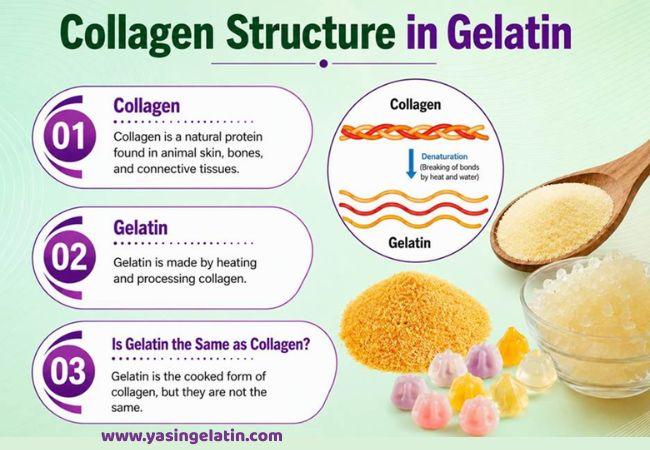
Collagen is a natural structural protein characterized by its triple-helix structure, which is formed by three chains of amino acids. When collagen is exposed to heat or chemical treatment, including acidic or alkaline conditions, this structure can be disrupted. The protein chains become shorter, more flexible and less organized, resulting in the material known as gelatin.
As demand for collagen-derived ingredients continues across the food, pharmaceutical, cosmetic and biomedical industries, understanding the structural relationship between collagen and gelatin is increasingly important for manufacturers and product developers. Differences in molecular structure directly influence solubility, water binding, gel formation, viscosity and other functional properties.
What Is Collagen?
Collagen is one of the most abundant proteins in the human body and is primarily found in the extracellular matrix, including animal skin, bones, tendons and connective tissues. It provides structural support, strength and flexibility to tissues.
Native collagen has a highly organized triple-helix structure. Three protein chains are arranged together to form this configuration, which contributes to the stability and mechanical properties of collagen-containing tissues.
Type I collagen is particularly common in skin, bones and tendons and is also an important raw material for commercial gelatin production.
What Is Gelatin?
Gelatin is a protein-derived ingredient produced through the controlled processing of collagen-rich materials. During production, collagen is subjected to chemical and thermal treatments that disrupt its native triple-helix structure.
Unlike native collagen, gelatin has a less ordered and more flexible molecular configuration. It can dissolve in warm water under suitable conditions and form a gel when the solution cools.
These properties make gelatin an established ingredient in food manufacturing, pharmaceuticals, cosmetics and selected biomedical applications.
Is Collagen the Same as Gelatin?
Collagen and gelatin are closely related but are not structurally identical.
Native collagen maintains its characteristic triple-helix structure, while gelatin is produced after this structure has been disrupted through controlled chemical and thermal processing. As a result, the two materials have different physical and functional characteristics.
Collagen is primarily associated with structural support in biological tissues, whereas gelatin is valued commercially for properties such as solubility, water binding and gel formation.
Molecular Structure of Collagen in Gelatin
Collagen contains significant amounts of glycine, proline and hydroxyproline. In native collagen, these amino acids form protein chains that are organized into a stable triple helix.
During gelatin production, heat and chemical treatment disrupt the interactions that maintain this structure. The protein chains become more flexible and less ordered.
This structural transition explains many of the differences between collagen and gelatin. The more open molecular configuration of gelatin allows it to interact with water and form a three-dimensional network when cooled.
Structural Changes During Hydrolysis
Hydrolysis and thermal treatment change collagen at the molecular level. Chemical processing helps prepare collagen-rich raw materials, while heating in water further disrupts the triple-helix organization and facilitates extraction.
The resulting gelatin contains many of the amino acids originally present in collagen, but its molecular organization and chain characteristics are different.
How Is Gelatin Made from Collagen?
Gelatin production generally begins with collagen-rich animal materials such as skin, bones, hides and connective tissue. The raw materials are cleaned and prepared before undergoing acid or alkaline treatment, depending on the production method.
After chemical conditioning, the prepared material is heated in water. Heat further disrupts the collagen structure and allows soluble gelatin to be extracted.
The gelatin solution is then typically filtered, purified, concentrated and dried to produce the finished commercial ingredient.
Acid Processing
Type A gelatin is generally produced using acid treatment. Collagen-containing raw materials are treated with acid solutions to prepare the protein structure for subsequent extraction.
The specific processing conditions can vary according to the raw material and the characteristics required in the final gelatin.
Alkaline Processing
Type B gelatin is generally produced through alkaline treatment. This method is commonly applied to collagen-rich materials such as bovine hides and bones.
The raw material may undergo an extended conditioning period before extraction. This treatment changes the collagen structure and prepares it for conversion into gelatin.
Heat Denaturation
After chemical treatment, the prepared collagen-rich material is heated in water. Heat disrupts the remaining structural interactions and enables gelatin to enter the aqueous phase.
The extracted solution is subsequently processed through filtration, purification, concentration and drying.
Type A and Type B Gelatin
Commercial gelatin is commonly classified as Type A or Type B according to the processing method used to prepare the collagen raw material.
Type A gelatin is generally associated with acid processing, while Type B gelatin is produced using alkaline treatment. Differences in processing chemistry can contribute to variations in characteristics such as pH, charge and isoelectric point.
The isoelectric point is relevant because it describes the pH at which the protein has a net electrical charge close to zero. This characteristic can influence gelatin solubility and interactions with other ingredients.
How Raw Material Sources Affect Gelatin
The source of collagen can influence the characteristics and applications of gelatin.
Bovine Gelatin
Bovine gelatin is commonly derived from cattle hides and bones. It is widely used in food, pharmaceutical and supplement manufacturing and is valued for its functional properties and gel-forming ability.
Fish Gelatin
Fish gelatin is commonly produced from fish skin and has characteristics that differ from mammalian gelatin. It can have a lower melting point and different texture and molecular properties, making it suitable for selected applications.
Type I and Type II Collagen
Type I collagen is abundant in skin, bones and tendons and is a common source material for commercial gelatin. Type II collagen is primarily associated with cartilage and is less frequently used as a conventional gelatin raw material.
The selection of raw material depends on production requirements, target specifications and the intended application of the finished gelatin.
Applications of Gelatin
The structural and functional properties of gelatin support applications across multiple industries.
Food Industry
Gelatin is widely used as a gelling, thickening and stabilizing ingredient. Applications include marshmallows, gummies, confectionery, jellies, desserts and other formulated foods.
Its ability to absorb water and form a gel contributes to texture, consistency and product stability.
Pharmaceutical Industry
Gelatin is extensively used to manufacture hard and soft capsules. It can also be used in selected pharmaceutical formulations and coating applications.
Its film-forming characteristics and ability to produce suitable dosage forms make it useful for pharmaceutical manufacturers.
Cosmetic Industry
Gelatin-derived and collagen-related ingredients can be incorporated into selected cosmetic formulations, including personal-care and facial products.
Their interaction with water and protein-based composition can support formulation requirements related to texture and moisture characteristics.
Biomedical Applications
Gelatin has been studied and used in biomedical materials because of its protein-based composition, processing flexibility and biodegradability.
Applications can include medical sponges, films and other biomaterial structures where controlled material properties are required.
Tissue Engineering
Gelatin is also used in tissue-engineering research as a material for developing scaffolds that can provide temporary matrices for cell growth.
Researchers have investigated gelatin-based structures in areas such as skin, cartilage and other tissue-regeneration studies.
Gelatin Structure and Functional Properties
The molecular structure of gelatin affects several properties important to manufacturers, including solubility, gel formation, water binding, viscosity and Bloom strength.
Gel Formation
When a gelatin solution cools, protein chains can partially realign and form a network that traps water. This produces the characteristic gelatin gel.
Gel strength depends on factors such as gelatin concentration, temperature, molecular characteristics and processing conditions.
Water Binding
Gelatin has a relatively open molecular structure that allows it to interact with and retain water. This property contributes to the moisture and texture characteristics of products containing gelatin.
Solubility
Because the native collagen triple helix is disrupted during processing, gelatin can dissolve in warm water under appropriate conditions. In colder conditions, gelatin generally absorbs water and swells before forming a gel during cooling.
Bloom Strength
Bloom strength is a standard measurement used to describe the firmness of a gelatin gel under defined testing conditions.
It is an important specification when manufacturers need gelatin with a particular gel strength for applications such as confectionery, desserts, capsules and other formulated products.
Viscosity
Gelatin viscosity can vary according to concentration, temperature, pH and protein-chain characteristics. Processing conditions therefore influence both the viscosity of gelatin solutions and the properties of the final gel.
Collagen and Gelatin Difference
Collagen and gelatin share a common protein origin but differ in molecular structure and functional behavior.
Native collagen has a stable triple-helix structure and occurs naturally in animal tissues. Gelatin is produced after collagen undergoes controlled chemical and thermal processing that disrupts this structure.
As a result, gelatin has a more flexible molecular configuration and can dissolve under suitable conditions and form a gel during cooling. Collagen, by contrast, is primarily associated with structural support in connective tissues.
The choice between collagen, gelatin and hydrolyzed collagen peptides depends on the required properties, processing conditions and intended end use.
Do We Absorb Collagen From Food?
Dietary collagen is processed by the digestive system into smaller peptides and amino acids before absorption. The body can then use these components as part of normal protein metabolism.
Gelatin is also digested as a dietary protein. When collagen-rich foods are heated in water for extended periods, collagen can be converted into gelatin, which is subsequently digested after consumption.
Hydrolyzed collagen peptides undergo additional processing that breaks protein chains into smaller peptide molecules. Their smaller molecular size is one reason they are widely used in dietary supplements.
The bioavailability of collagen-derived ingredients depends on factors including molecular form, peptide size, processing method and individual digestion.
Choosing Gelatin for Collagen-Based Applications
Manufacturers selecting gelatin generally consider several technical and commercial factors, including raw material source, Type A or Type B processing, gel strength, viscosity, solubility, purity, pH, molecular characteristics and regulatory requirements.
The appropriate gelatin specification depends on the requirements of the finished product rather than simply the source of the collagen.
For food products, manufacturers may prioritize gel strength, texture and sensory characteristics. Pharmaceutical applications can require consistent viscosity, purity and suitable capsule-forming properties. Cosmetic and biomedical applications may require additional specifications related to purity, compatibility and processing performance.
Choosing a Reliable Gelatin Manufacturer
When sourcing gelatin, buyers commonly evaluate production standards, raw material sources, quality-control procedures and certifications.
Quality systems such as ISO 9001 and ISO 22000, together with HACCP-based food-safety practices, may be relevant when evaluating suppliers. Depending on the destination market and intended application, Halal certification, GMP-related practices and other regulatory documentation may also be important.
For international sourcing, manufacturers should evaluate production consistency, traceability, technical documentation and the supplier’s ability to provide gelatin with stable specifications.
Gelatin Export to the Middle East
For gelatin intended for Middle Eastern markets, buyers may pay particular attention to Halal certification and applicable food-safety and regulatory requirements.
Clear documentation regarding raw material origin, processing methods and certification can support international procurement and market acceptance.
Sustainability of Gelatin Production
Gelatin production can make use of collagen-rich animal by-products such as bones, skin and hides. Converting these materials into functional ingredients provides an additional use for resources generated by the meat and livestock industries.
From a circular-economy perspective, by-product utilization can increase the value obtained from animal-derived materials while reducing the amount of material requiring disposal.
The environmental profile of gelatin production nevertheless depends on factors such as raw material sourcing, energy consumption, water use and wastewater management.
Conclusion
Collagen and gelatin share a common protein origin but differ significantly in molecular structure and functional behavior. Native collagen is characterized by a stable triple-helix structure that provides structural support in connective tissues. Gelatin is produced when collagen undergoes controlled chemical and thermal processing that disrupts this organization.
The resulting gelatin has a more flexible molecular structure and can dissolve under suitable conditions, bind water and form gels during cooling. These properties make gelatin an important ingredient for food, pharmaceutical, cosmetic and selected biomedical applications.
Understanding the relationship between collagen structure, processing conditions and gelatin functionality can help manufacturers select appropriate raw materials and gelatin specifications for different formulations. Factors such as collagen source, processing method, Bloom strength, viscosity, purity and regulatory requirements should all be considered when choosing gelatin for commercial applications.
FAQs
Can I Use Gelatin Instead of Collagen?
Gelatin and collagen are related but have different structures and functional properties. Gelatin can replace collagen in some food applications where gelling is required, but it is not structurally identical to native collagen and is not necessarily interchangeable with collagen-based supplements.
Is Gelatin Good for Collagen Production?
Gelatin contains amino acids such as glycine, proline and hydroxyproline, which are also present in collagen. These amino acids can be used by the body as part of normal protein metabolism, including the synthesis of proteins such as collagen.
Which Collagen Type Is Found in Gelatin?
Type I collagen is a common source material for commercial gelatin and is abundant in animal skin, bones and connective tissues. During gelatin production, chemical and thermal processing changes the original collagen structure and produces gelatin.
What Is the Main Structural Difference Between Collagen and Gelatin?
The main difference is that native collagen has an organized triple-helix structure, while gelatin is produced after this structure has been disrupted. Gelatin therefore has a less ordered and more flexible molecular configuration.
What Factors Affect Gelatin Quality?
Gelatin quality and performance can be affected by raw material source, processing method, molecular characteristics, Bloom strength, viscosity, purity, pH and storage conditions. Manufacturers should select specifications according to the requirements of the final application.
Yasin Gelatin
Yasin Gelatin
+86 186 9834 4931
info@yasingelatin.com
Legal Disclaimer:
EIN Presswire provides this news content “as is” without warranty of any kind. We do not accept any responsibility or liability
for the accuracy, content, images, videos, licenses, completeness, legality, or reliability of the information contained in this
article. If you have any complaints or copyright issues related to this article, kindly contact the author above.

Media gallery